

Advocacy has to happen everywhere, not just in the courtrooms
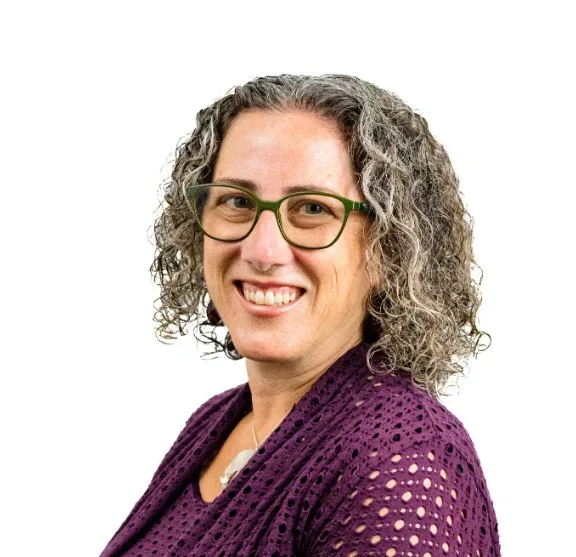
I loved school, and I always knew I wanted to help people. I just didn’t know how.
I went to law school, but I wasn’t drawn to the law for the sake of the law. When I started interviewing for jobs, I knew I wanted to work in nonprofit and social justice. In my mind, I imagined I’d be helping kids. I interviewed for an attorney position at a law firm, and midway through the interview I learned I’d be representing parents instead.
I remember thinking, “I’ll do this for a couple of years. Maybe it will help me be a better kids’ attorney.”
Then I fell in love with the work.
It became clear almost immediately that by representing parents, I was helping their children. Nearly every child in dependency court wants one thing more than anything else: to go home. To be with their parents.
I also saw right away that the playing field is nowhere near level. And I saw parents who absolutely deserved to have their children with them.
My own lived experience was very different from many of the parents I represented. But they were survivors. Every one of them. They had lived through things that would break most people, and they were still fighting. I was in awe of them.
As my career grew, I learned that the courtroom is only one piece of the work. The system harms families in ways most people never see. Decisions about access to treatment, housing, transportation, visitation, and basic services can make or break a case long before anyone ever stands before a judge. I learned that advocacy had to happen everywhere: in hallways, in meetings, in county workgroups, and in policy spaces where families rarely have a voice.
I had mentors who modeled real leadership. They were willing to name the real issues: the racial disparities that show up in every corner of family policing, the lack of substance use treatment, the absence of holistic support. They showed me that our responsibility is not only to represent a client well, but to push the system to do better.
That’s the culture that shaped DAC from the beginning. And it’s why your support matters.
Your gift helps parents walk into a courtroom with a full team behind them with an attorney, a mentor parent, and a social worker who believe them, listen to them, and fight alongside them.
Your gift keeps families from being swallowed by a system that often assumes the worst.
Your gift lets us keep telling the truth about what is happening inside courtrooms that the public never sees.
Over my career, I’ve learned that trust is the center of everything.
Clients don’t owe us their trust. We have to earn it. Even though we aren’t government, we are still seen as part of the system. No matter how deeply I see myself as an advocate for families, they still see me through a history of harm until I prove otherwise.
In leadership, the same is true. You earn trust with staff. You earn it with community partners. You earn it with the bench. You earn it with policymakers and funders. That trust is built through consistency and honesty. It’s built by doing what you say you will do.
DAC is fortunate to have built that trust over many years. We didn’t inherit it. We earned it family by family, case by case. And we cannot take it for granted. We don’t take it for granted.
Your support helps us protect that trust.
It helps us stay independent, honest, and committed to our values.
It helps us keep the promise we make to every family who walks through our doors: you are not alone in this.
Hilary Kushins
Chief Program Officer, Co-Founder Dependency Advocacy Center
Donate here.